Banal Friendship and Survival Relationships
If you had to maintain contact with someone you see daily at work or university, without this bond, would you? And would the other person do it too?
 Alejandro García Peláez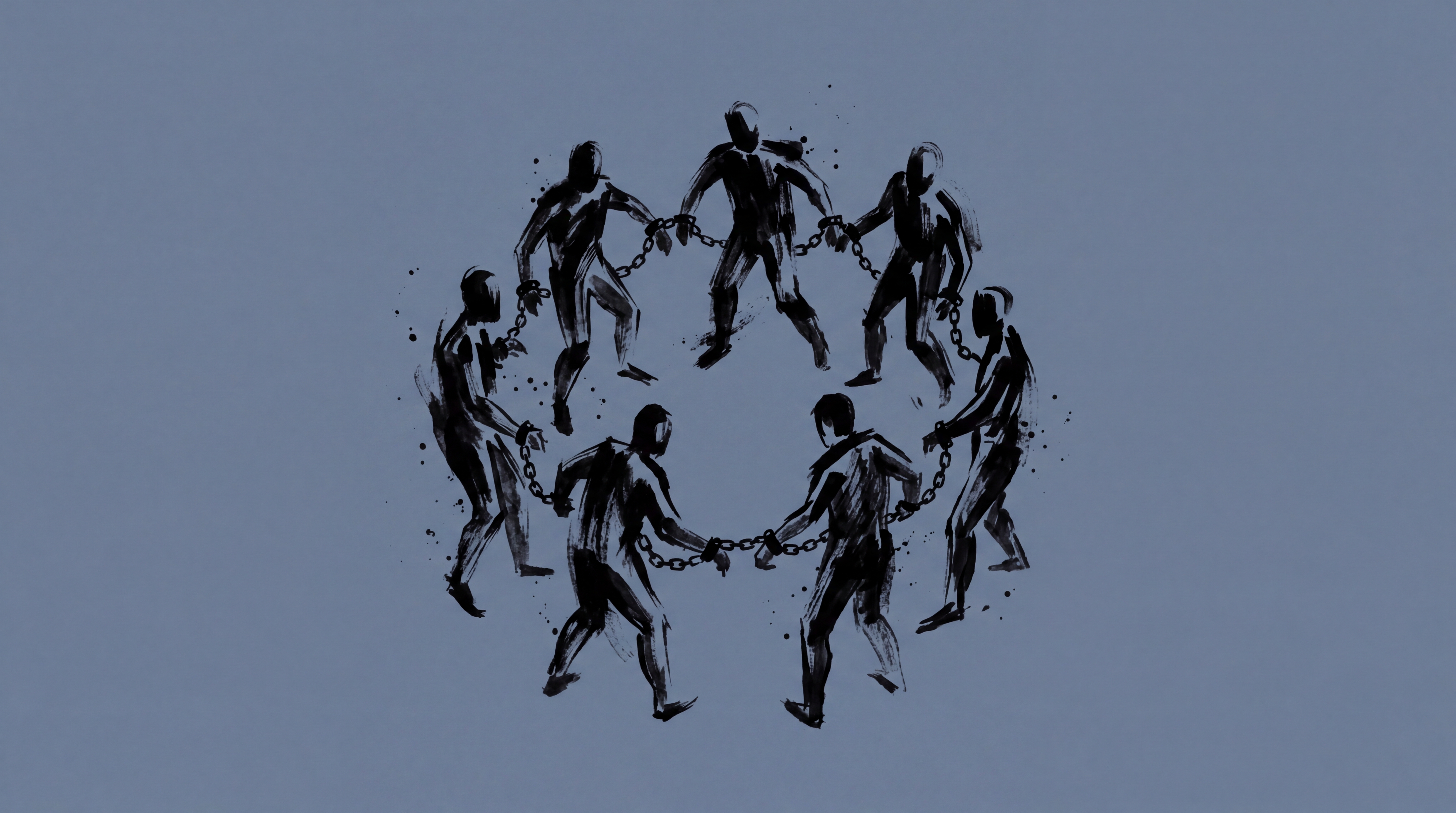
When we are children and attend class, we spend many hours a day in a room with a couple of dozen people. We are all the same age, we go to that space daily where we share teachers, experiences, and concerns… the first days can be about recognition; you take a look around, you become familiar with the room, with the people there; they sit you next to someone you might not know, and the different personalities of the group begin to take shape: there is the one who draws attention, the smart one, the one who is more reserved, or the one who always forgets things. Gradually, the initially scattered group tends towards order, and different “islands” (subgroups) are formed following various criteria, from shared tastes to the purest of symbioses.
This behavioral pattern shown in one of our earliest stages is replicated as we grow and acquire more awareness, whether in high school, university, or work.
There are many people. Impossible to know them all. The situation described above segments and creates a direct link with the rest of our peers. The question is… would you have established the relationship if you had to segment and create that link yourself?
Survival relationships
The environment forces us to group together. Partly to avoid loneliness or to be able to support each other when we need it (for example); in the end, this need is something biological that comes from the evolution of the tribal human being. And whether we like it or not, we are social beings.
However, this generally makes us comfortable and does us a disservice; the fact that they “break the ice” and create a “controlled” environment that facilitates the process for us, restricts the discovery of other people who are more like us or who can contribute more to us.
Not only this, but many of these relationships endure over time and sometimes one is unable to end them. We wrongly think that we still need that relationship for our well-being.
We are guided by the “law of least effort,” the comfort imposed in our circle, and the fear of discovering what is outside of it, of being rejected, or even thinking that you are nobody without those people.
Digital alienation
In recent decades, our way of relating has been changing by introducing electronic devices into our daily lives; now we can easily interact with anyone we see on social networks simply by sending a text message. This is incredible. It opens up a wide range of possibilities and dissemination of human knowledge. However, it makes us face human vulnerabilities unknown until now.
Lying in bed, in our comfort zone, from our home, we can interact socially, ignoring, of course, certain aspects that we must face in a physical exchange… the act of approaching the other person and the group, evaluating their expression throughout the dialogue, or simply enduring an awkward moment. The discussions themselves, the confrontations, sentimental breakups, or signs of affection, care, or respect are now manifested in a series of sentences written in a text message.
What connects us to millions of people in the world can disconnect us from the world, from our environment, forces us to chase a ghost of a reality that is nothing more than a mere illusion of the digital paradigm and its continuous bombardment of stimuli.
Banal friendship
So what is friendship really? You can know many people and feel that something is not right. Feel that “you are there but you are not”; that despite the passing of time, you don’t quite fit in, you don’t feel comfortable, or you feel invisible, simply.
In one way or another, for better or for worse, the people who are part of your life influence you. But to what extent do they condition you? How much do they shape who you are?
The idea of leaving our safe zone does not only imply relating to people who are “identical” to us; it means exploring beyond these contextual relationships, understanding others, and questioning your own prejudices built over the years… it is giving yourself the opportunity to see other points of view and nourish yourself with that knowledge.
So, I ask you… if you had to maintain contact with someone you see daily at work or university, without this bond, would you? And would the other person do it too?