The Fall of the Personal Wall
Do we confuse digital closeness with genuine trust? Do we know how to respect other people's boundaries and, above all, our own? A reflection on proxemics, social media, and how hyperconnectivity blurs our personal boundaries.
 Alejandro García Peláez
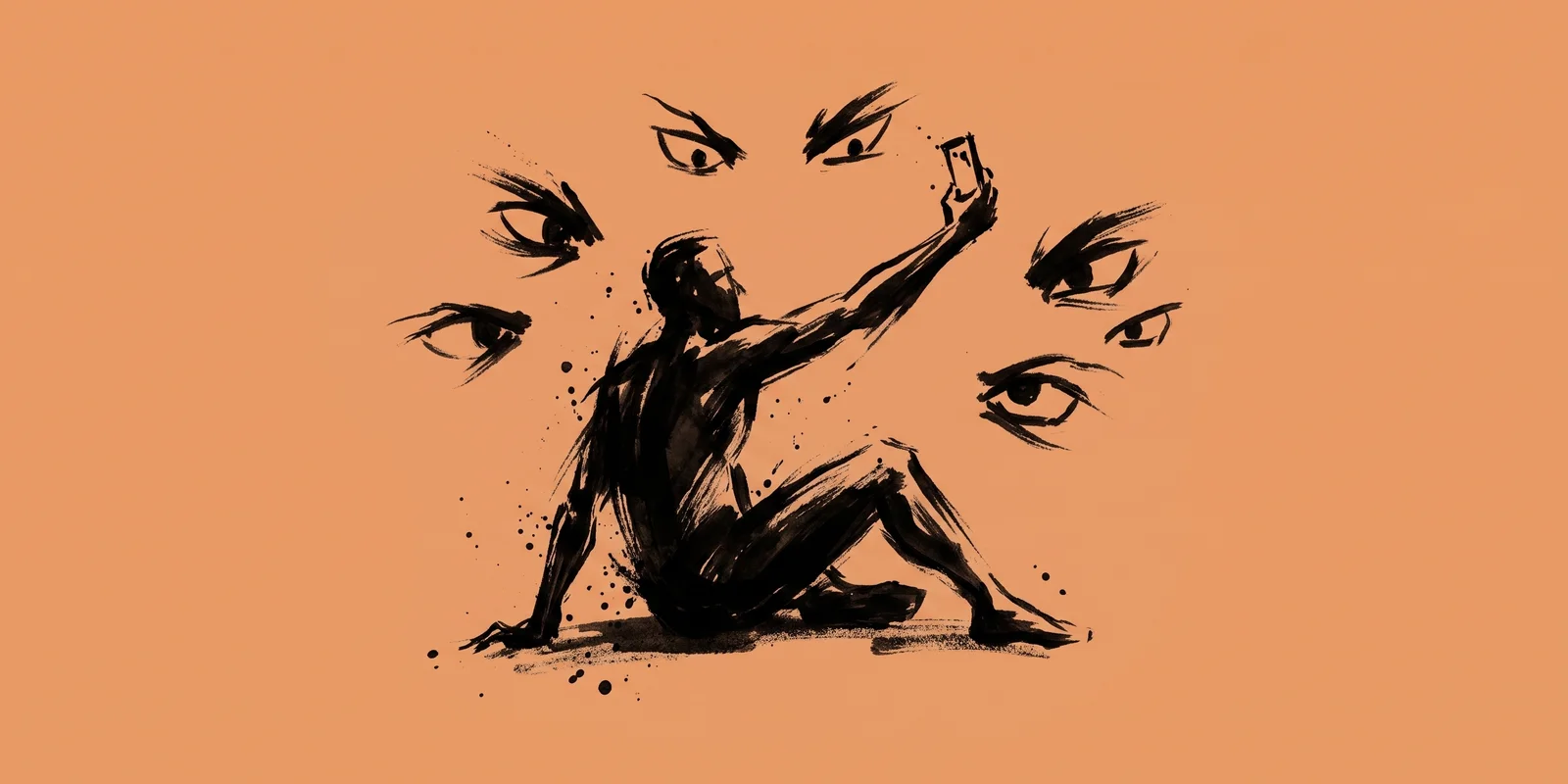
Some people act as if they have every freedom in the world after barely getting to know you… you’ve probably encountered someone like that at some point in your life. They get too close and become overly familiar, whether consciously or unconsciously. Sometimes, this can lead to uncomfortable situations, as they intrude on your personal space.
Proxemics is the study of how we use physical space, of how we use distance to communicate with others.
The Hidden Dimension
The title of this section is a reference to the work of Edward T. Hall, an American anthropologist who gave his name to this branch of nonverbal communication known as proxemics.
The idea is to explore how individuals manage their own physical space, a social distance governed by subtle rules that correlate with physical distance. Hall identified four types of distance:
-
Intimate: from direct physical contact to around 45 centimeters. This space is reserved for those closest to us and those we trust the most. It is our private zone, shared with close friends, family members, or partners.
-
Personal: further away than the previous one, up to a little over a meter. We can reach the other person by stretching out an arm. This is the distance usually maintained with coworkers, at meetings, parties, or during conversations. The closer we are, the more trust there is, at least in theory.
-
Social: even further away, around 3 meters. This is the distance we maintain when dealing with strangers or people with whom we have no relationship of “friendship”.
-
Public: beyond 3 meters, with no upper limit. Ideal for addressing a group of people, typically in classes, talks, or work presentations.
It is worth noting that cultural factors influence these distances, which can also vary depending on how warm or reserved an individual is.
Over the last few decades, a new way of communicating has emerged, a new way of presenting ourselves to the world… how does this affect our personal relationships and our “digital” space?
The Digital Dimension
Once again, the way we relate to one another has changed abruptly in recent years. Younger generations inhabit social networks, exchanging messages, photos, memes, and so on. We can actually map traditional proxemics onto digital proxemics… we’re no longer talking about physical space, but about attention, availability, and intimacy:
-
Intimate Distance: a personal phone call (or video call). It demands full attention and availability.
-
Personal Distance: a WhatsApp or Telegram message, requiring a clear reason or an existing connection.
-
Social Distance: direct messages (DMs) or direct replies to stories. A way of approaching someone.
-
Public Distance: there is no privacy. Anyone can look, anyone can respond.
Before our brains have even had time to adapt, we’ve changed the way we relate to one another, moving from the physical to the digital. From a tangible space, rooted in the moment… to an abstract one based on attention, time, and exposure…
The Dissolution of Distance
Who do you live for? Yourself or others?
Nowadays, it’s common to “stalk” someone or scroll through their social media profiles to snoop around and form an impression of them (the impression that person wants us to have). What once involved a series of actions to get to know someone and earn their trust has now become instantaneous.
We are wide-open books, accustomed to letting others access our lives through a screen. And whether we like it or not, this influences the way we live, the things we do, and how we present ourselves… it shapes the way we behave towards ourselves and others.
Hyperconnectivity has damaged this process of earning someone’s trust, and we assume the right to closeness from the very first moment.
We confuse (or ignore) the boundaries of our digital dimension, both our own and those of others, while the fear of rejection or the constant need for approval intensifies our insecurities in face-to-face social relationships.
Not speaking up when something bothers you for fear of the consequences, making yourself immediately available for fear of being forgotten, or being afraid to leave someone “on read” in case they do the same to you… these are just some of the behaviors fueled by the constant pressure to keep performing in a digital theater that consumes us every day.
And it seems that relationships have become something fluid.
Today’s characteristic narcissism and selfishness, amplified by instant sharing; the image as the queen of our lives; carpe diem as a pop religion… all these factors have contributed to the perception that everything is fleeting and nothing lasts. And everything must be immediate… or it loses our attention.