Panoruma
Rescuing and democratizing historical photographic archives for the web.
Given the nature of this project, I believe it’s better to set the technical aspects aside for this section and focus on the why.
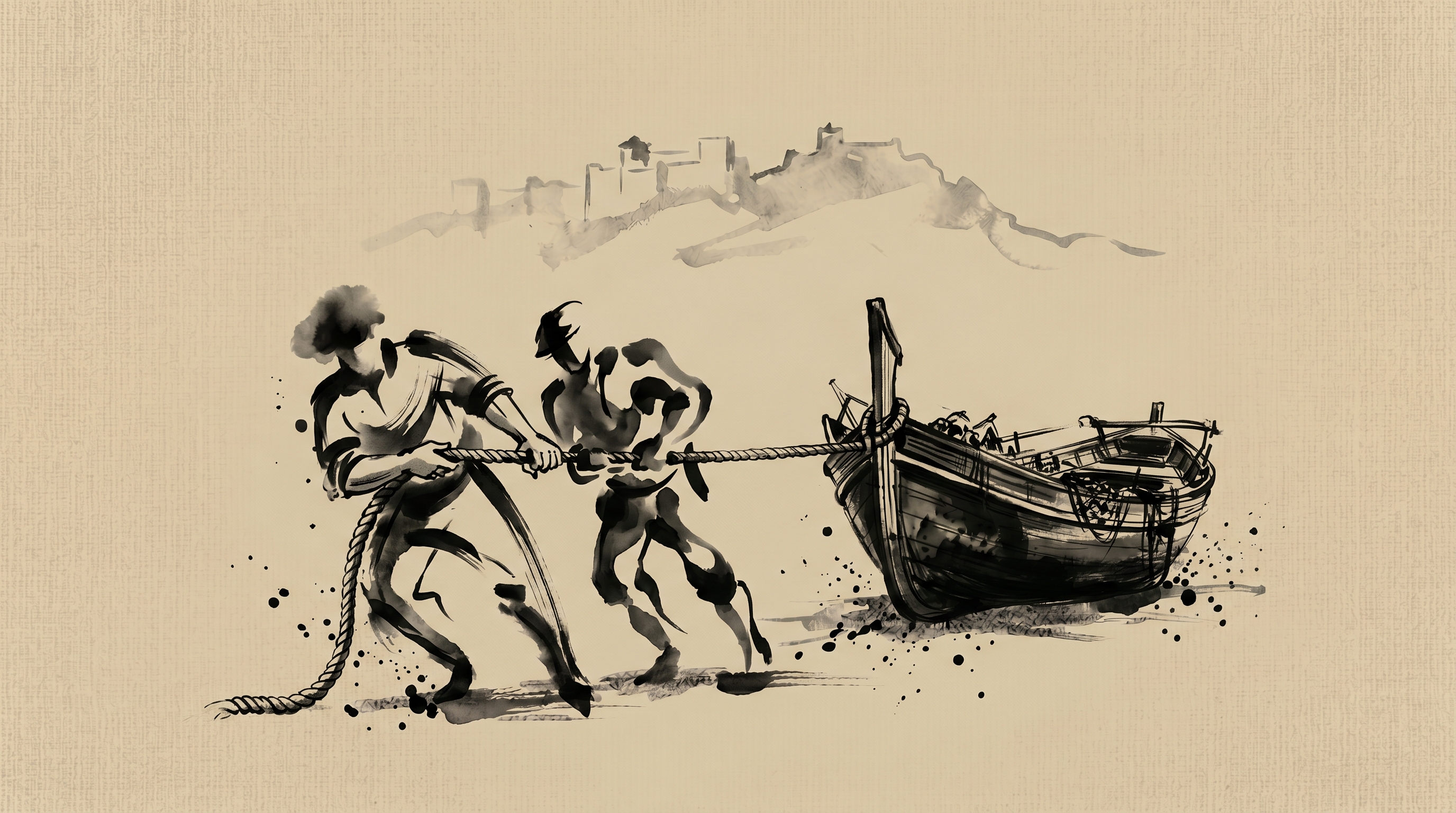
The history of a community is our own history. Generations that have seen us grow and to whom we owe everything, because without those people the world wouldn’t turn. History usually focuses on great characters and the most relevant events… but if we look beyond that, it is daily life, the people, who build and advance true history.
I would be lying if I wrote here that I’m not concerned about how to unify, preserve, and distribute everything that has been reflected through various means like photography, across our entire history. And that’s why Panoruma was born.
Thousands and thousands of images accessible publicly via URLs… but they needed a more modern presentation and a way to filter so that anyone could search with ease. And how can anyone search with such ease? By using words, tags to name the things we observe.
I felt an urgent need to act and thought about the interface and the classification and search engine that could make this idea possible. I found the answer in a technology that has begun to gain traction over the years: language models (ChatGPT, for example, is a language model). The idea was to generate an objective description that would allow anyone to filter through thousands and thousands of images using language. In one night, I already had about 3,000 images classified in a small test.
But none of this would have been possible without:
-
The excellent work of the University of Málaga’s archive, by people like Javier Ramírez (Doctor in History, photo-historian, former director of the UMA Image Technology Center and contributor to Diario Sur) or Mercedes Jiménez Bolívar (Photographer, graduate in Documentation from the UOC, and head of the Historical Photographic Archive of the University of Málaga since 1996), whom I’ve had the opportunity to meet (and learn from).
-
The support and direction for the final degree project by the Chair of Artificial Intelligence at UMA, Francisco Vico.
-
The Google Gemini LLM tokens and the support of Bernardo Quintero (founder of VirusTotal and director of the Google Safety Center in Málaga).
There is still much work to be done; this is only the beginning. There are still physical photographs that haven’t been digitized, which will be lost over the years; there are collections of photographs that are not so accessible and others scattered in different places. As well as all the collective knowledge that resides in people’s minds, narrating the era from different perspectives, with unique experiences…
To navigate our history access Panoruma
Alejandro, April 29, 2026